Hike more vert.
Handle your pack for endless miles. Build the capacity to carry weight, the hips and lower back to keep carrying it, and a plan for what goes in the pack.
What we train
Load-carriage capacityLoaded pack conditioning that builds up gradually to the weight your trip needs.
Hip and lower back resilienceHinges, carries and single-leg work for long days under load.
Multi-day fuelingMacro targets at home, and a meal plan that paces your food across the trip.
Tools for the trip
How it works
Two minutes: your sport, your goals, your schedule, any injuries. I review every one.
A baseline on strength, aerobic fitness and mobility, for home, gym or both.
Log in the app. Each week I send a short video reviewing your logs and your lifts.
What clients say
Julian and I worked together for the better part of three years. When I met him I had a bum knee, couldn't run, and was in an awful headspace. In the first six months I dropped ~20lbs, in the following eighteen I put on ~15lbs of muscle. Despite going literally from couch to three hours of working out a day five days a week I was never injured at any point in those three years. Over that time Julian and I built a friendship and I learned how to take care of my body. It's been four years since I first started working with him and the spreadsheet he gave me to help me track my nutrition and workouts is still an integral part of my daily routine.
Ways to train
Start small. Move up when you want more coaching.
6 weeks in the app on your sport's program.
- Program for your sport
- Log and track every session
12 weeks with a group.
- Everything in Trial
- Group training block and check-ins
Your program, adjusted by me every week.
- Weekly video review of your training
- Form checks by video, answered within 24 hours
- Mid-week check-in
For a big season. Limited spots.
- Everything in Async coaching
- Training planned around your races and trips
Questions
How heavy should my backpacking pack be?
A common rule of thumb is no more than about 20% of your body weight for a loaded pack, and less is more comfortable. Base weight is everything in the pack except food, water and fuel, so that's the number to cut first.
How do I train for backpacking with a heavy pack?
Start with a light pack and short hikes, then increase either the weight or the distance, not both at once. Add hinges, split squats, step-ups and loaded carries in the gym.
What is base weight in backpacking?
Base weight is everything in your pack except consumables like food, water and fuel.
How much time does it take?
Two to three hours a week, built around your work and your time outside.
I have an injury. Can I still train?
Tell me in the intake. As a licensed physical therapist assistant, I build training around it. Diagnosis and treatment stay with your doctor or physical therapist.
Start your intake
Two minutes. Then pick a time for a 15-minute call with me.
Form not loading? Open it here.
Your coach
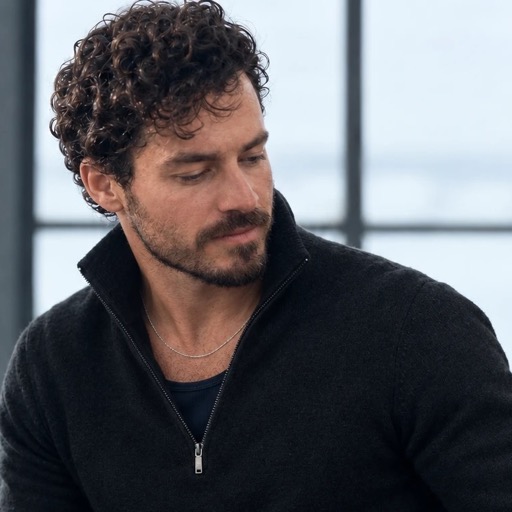
I built Do More Vert because the mountains ask things of your body that a normal gym program ignores. I'm a trail runner and a licensed physical therapist assistant training for LA28, and I coach on the same system I use.
I trained for and finished the Broken Arrow Iron Crown at Palisades Tahoe: the Iron Face climb, the 23K and the 46K across one multi-day race event, roughly 45 miles and 16,000 ft of climbing. I also run the Broken Arrow 11K and get faster every year.